
on some mornings this month
we woke up to the ground covered in frost —
white, so white
I hope it comes along with some fruit
the peach trees are already blooming
soon it’ll be the plum trees’ turn,
then the orange trees, pear trees, mulberry trees…
the banana plants are gone —
will they come back?

I wonder: what is the importance of materials in the making of art and craft today?
While reading the book Kama kara mita yakimono (ceramics seen from the kiln), I realized that many potter communities in Japan settled near the places where they collected clay. The kiln, in turn, couldn’t be built far from there either — it was usually located near the mountains, close to the source of the clay. The difficulty of transporting heavy materials helped shape this relationship of proximity.
Here in the Americas, clay has also been — and still is — widely collected for making ceramics, bricks, and many other things. Clay is abundant around here. Even so, nowadays it’s easier and more common to buy industrial clay: extracted from different places, processed into a consistent, packaged, homogeneous, safe, ready-to-use material.

This question came up during a discussion of Chapter 4 from the book Folk Art Potters of Japan – Beyond an Anthropology of Aesthetics, by the English anthropologist Brian Moeran. It was part of a conversation in GEAS – the Art and Society Study Group. The text suggests that clay — and the way it’s prepared — directly shapes the rhythm of a community. And I wonder: how does industrial clay affect the rhythm of ceramic production today?
That question leads to others.
I’ve always admired those who work with wild, locally collected clay. But at a certain point, I decided it wasn’t my time yet. I do use some collected materials — ashes and clay — in my glazes and slips. I have a few reasons:
First, a lack of technical knowledge.
Second, not having the right tools to prepare the clay myself.
Third, fear: fear that the clay might melt in the kiln and damage the equipment; fear that it might not sinter (and if it doesn’t, the piece remains porous and absorbs liquids).
And finally, something more intuitive: I feel that wood firing gives life to collected clay — and without it, something is missing.
There’s also a more collective reason. Here, where I live, there’s no living cultural heritage of clay gathering. It once existed — but as we know, the Indigenous peoples who held that knowledge were expelled, silenced, and killed during colonization, and are still being threatened today.
So what would be the reasons to work with collected clay?
Is it just an aesthetic choice? A sustainable one?
Here, I borrow the desire expressed by Nego Bispo: a desire to relate — to live the poetics of relationship with the land. To be with it.
Collected clay can tell the story of a territory. And by not gathering it, I feel like I’m missing the chance to learn this story through the soil — missing the chance to relate to the land through the clay.
Making your own material is complex.
Often, other people take care of that part — a job that’s almost always made invisible. Just like firewood cutters…
These practices were only possible because there was collectivity.
But how do we do something like that without a collective around us?
Also, in Brazil, there’s a strong concern about clay sintering. That’s another reason I’ve hesitated to prepare my own clay. But it wasn’t always like this.
Our iron-rich clays don’t necessarily need to sinter — and maybe we should embrace that.
As Talita mentioned during our group discussion:
why not welcome this “non-sintering” quality and, through it, create new paths and new encounters?

I want to get to know what’s nearby.
To learn more about the origin of the materials we use, about their processes, and to tell stories through them.
Our soil — so ancient — is also deeply powerful.
Maybe it’s time for a decolonial turn in this practice?
These are ideas… that I hope to one day put into practice.
being-with-the-earth.

Thanks to geologists Ruvi and Maci for the field day!

At the end of the month, I went to Curitiba to take part in the Pan-Cinema festival, which this year focused on Japan. I helped with translation and joined the workshop 3D Abstract Cinema: Handmade Image and Sound, led by Takashi Makino.
During the workshop, he shared his artistic process and the way he communicates with the audience.
I got to learn more about an analog approach to filmmaking.
It was incredible.
And the final pieces we created… turned out amazing.
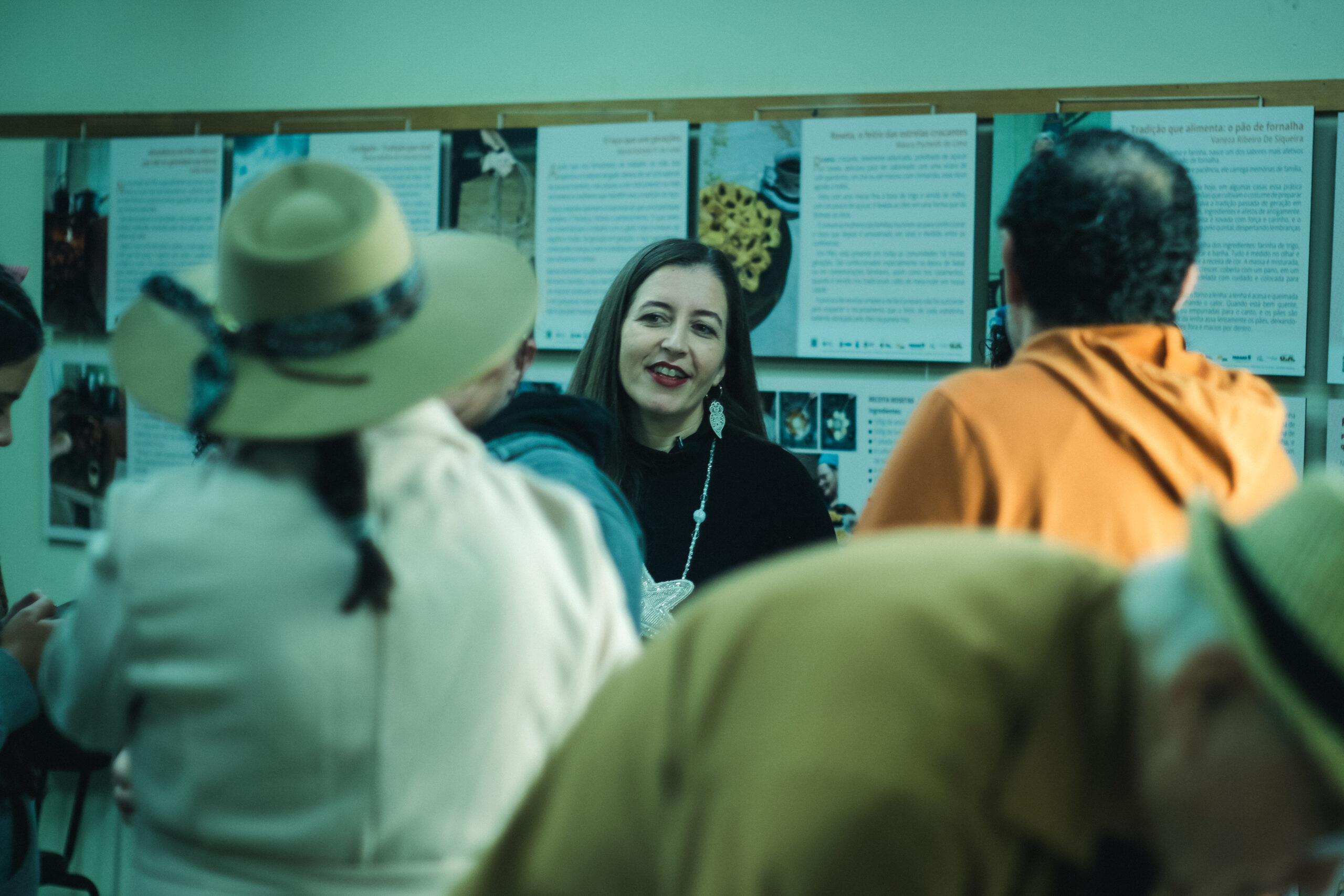


(this part deserves our deepest gratitude and recognition for the work of Olaria Cultural, under the guidance of Lia Marchi and Carol Mira. You didn’t pull the pin on the grenade — you furrowed the land and planted powerful seeds)
It all started with an announcement on Radio of Piên, which I heard while waiting for lunch at my grandparents’ house. I don’t remember the exact words, but terms like culture, Piên, course, invitation made me think: “Hmm… I think we need to show up in that space.”
Another happy coincidence.
It was a 40-hour course (literally — 10 classes, 4 hours each — and Lia and Carol, the instructors, made a point of ensuring that every class lasted at least 4 full hours, from 6:30 p.m. to 10:30 p.m.). All the sessions took place at night, in what we call “the third shift” — the time reserved for us workers: educators, factory workers, cultural workers, agroecologists… The course, offered by Olaria Cultural (based in Curitiba), aimed officially to spread awareness of intangible cultural heritage — that is, the cultural practices that shape and sustain the particular ways of life of a community — in this case, the community of Piên. Beyond the lectures, the course encouraged each participant to conduct personal research, which culminated in an exhibition held on July 9th.
Horseback riding, coscorão (a traditional fried pastry), stories and tales, sementes crioulas (creole seeds), pão de fornalha (wood-fired oven bread), lassoing, and many other cultural practices central to Piên’s identity were transformed into beautiful, collectively crafted research projects. And on the evening of the exhibition opening, the pride and emotion overflowed — in every hug, every smile — embraced by the warmth of the Piên Municipal Library.

Throughout the course, you could hear quiet whispers here and there:
“More people could’ve come, don’t you think?”
“There’s not a single member of the Cultural Council here… Weren’t they so eager to be on the Council? Now not one of them shows up to help research and write about Piên’s culture?”
“There’s almost nothing written about Piên’s own history, about its own culture…” … and so on.
The overall impression was that the initiative was met with neglect — underestimated by Piên’s public officials. And those of us who actually live in the city know how to tell when these agents are truly engaged in an event.
It’s true that the Municipal Department of Culture provided space for the course and arranged a van to take participants to a class held in the neighboring town of Tijucas do Sul. But let’s be honest: it would have been strange if they hadn’t. As a citizen, I consider this the bare minimum. Acknowledging their support is important, but it also needs to be put in perspective: this wasn’t a noble act or a great effort — it was a public duty.
If access to culture is a right of the people, and its promotion a duty of the State, then we wouldn’t be wrong to say that the Department of Culture merely did what it was supposed to do: to facilitate cultural activity by opening the Casa da Cultura for gatherings that were — literally — about culture. Whether that duty was well or poorly fulfilled is open to discussion, but we must recognize, and with the proper measure, that it was at least fulfilled. And to be honest, from my point of view, the makeup of the group couldn’t have been better. People from different backgrounds, with different ways of perceiving and living life — an unlikely gathering of diverse subjectivities that, somehow, gave rise to a collective united by desire and absence:
The absence of collectives like this in our city — collectives with the purpose of researching and writing about their own culture, about the place they inhabit; of recording the past, describing the present, and imagining futures together. And the desire to share this practice with anyone who feels drawn to work on it too — autonomously, and with aligned intentions. No one there was obligated to show up. No one was forced to attend ten 4-hour classes, from 6:30 p.m. to 10:30 p.m. — unlike the political appointees who were pressured to show up at the Municipal Culture Conference, as we mentioned in last month’s newsletter.
Even so, those who came — and stayed — for the Living Heritage course felt the joy of being part of a collective that is both diffuse and determined. And joyful.

The collective remains united.
The course may be over, but the exhibition opening also marked the opening of a powerful horizon for Piên’s cultural life.
The group continues — and keeps growing — imagining and working together to expand this project.
Here are our next steps:
First step: keep gathering, keep exhibiting and sharing our work, keep passing on what we learned and created throughout the course and our research.
Second step: secure public funding through the National Aldir Blanc Policy for Cultural Support to deepen our research and turn it into a photobook — the first of its kind in the town’s history — to consolidate everything we’ve learned and created during this journey.
Third step: broaden the group’s scope of action, always remaining open to new members moved by the same desires and purposes.
Fourth step: enjoy the path ahead — with discipline, unity, and joy — because we know it won’t be easy. It’s a long road, with lots of work, and it may face authoritarian or ill-intentioned resistance. Paranoid? Not at all. History teaches us that this isn’t paranoia — it’s awareness: attention to detail, discernment, and the understanding that a group like ours might be seen as a threat to the local political status quo. That’s why I’ll say it again: we must remain attentive and strong. What we have on our side is the beauty and power of what we’ve done so far, and of everything we still intend to do — for as long as life allows us to keep doing it, together.
If the tone of last month’s newsletter carried the natural discouragement that comes from a fresh defeat, this one brings the energy of new paths opening — thanks to the goodwill of good people who share the same hopes we do. And it doesn’t end here: just last Saturday, August 2nd, another group came together with similar intentions. Another diverse and unlikely gathering — but one with the desire to spark new cultural flows in our town. But that’s something we’ll save for the August newsletter. Until then, we’re happy to share the work we’ve done with you:
Gabi – Farming, seed saving, and sharing of creolle seeds in Piên
Maci – The knowledge of pinhão gatherers
Ivan – “It’s all process”: the weaving of the campesino basket

CineNômade
“Eyes on the road to leave again / As many times as the ritual demands /
The van loaded like a fuse / Armed with ideas and the will to act” — Dead Fish, Asfalto
A woman. Young — about to turn 30. 165 centimeters tall. Eyes alert and anxious, yet still carrying a distracted, wandering gaze. Behind the wheel of the Sprinter van, she carried with her: Erick, Fábio, Danilo, Leo, and Maci. They left Piên at 7 p.m. on Friday, July 11th, and just before midnight, they caught sight of the glow of the Hercílio Luz Bridge lighting up the bay of Florianópolis — like a runway leading to the island. They had arrived in Santa Catarina’s capital for the final screening of the first season of CineNômade.
True to the nomadic spirit of the cineclub, we brought the last session to Aresta Equipamentos — also known as “Bárbara Pettres and Luciano Trevisol’s place.” A string of lightbulbs bathed the backyard in a warm hue, making everything feel as cozy as a Studio Ghibli film. But, as with any amateur project, there’s always room for things not to go according to plan — so it was no surprise when the audio of the film, Phantom Thread by Paul Thomas Anderson, refused to come through the speakers. A collective effort tried to resist fate — but obviously, it didn’t work. And yet, as they say, a smooth sea never made a skilled sailor — and most people there were used to navigating the choppy waters of joyful, stubborn amateurism. Patience settled in, transforming that hiccup into raw material for a collective solution that ended up being even more powerful than the original screening.
“Well, since the film didn’t work out… why don’t we take advantage of having some filmmakers here and screen their films?”
VÃNH GÕ TÕ LAKLÃNÕ and estar-com-a-terra were projected onto the white sheet Luc had set up in the Aresta backyard — and they moved everyone deeply. Afterward, a conversation with the filmmakers brought the night to life — and all who were there celebrated the beauty of serendipity. Embracing contingency: because amor fati isn’t always about sacrifice.

The Temporary Autonomous Zone has been — and still is — a powerful idea for me.
I first came across it thanks to Sérgio Leite Barboza, back when we still shared a roof in the Sambaqui house. He had that pocket-sized edition of TAZ (Temporary Autonomous Zone) by Hakim Bey, published by Conrad. We read it among friends, and it helped me understand the many possibilities the idea holds.
And even if the concept might feel somewhat dated or naïve to some, I feel it still grounds much of what I do when it comes to creating spaces for encounters. It’s like listening to the bands I loved in my teens — and realizing their lyrics still resonate with my ethical principles.
I feel like I’m still learning what the idea really means — because, as is often the case with anarchist thought, practice gives meaning to theory. And every time I experience a TAZ, it’s always different: because the group is different, the context is different, the historical moment is different, I am different. And yet, each time it leaves a deep mark — teaching me something and giving purpose to the journey.
The first season of CineNômade was yet another Temporary Autonomous Zone:
free, mobile, deterritorializing and deterritorialized, rich in imagination, ephemeral, self-aware, and above all — joyful.
A tear in the fabric of neoliberal routine — through which meaningful encounters could blossom, pointing toward new possibilities, however small they may seem. And that was only possible because of everyone who made up this band of travelers. So: thank you!
P.S.: thank you, Danilo Teixeira, for the cover photo and for being a comrade in stirring things up.

It’s not every day the sun shines the way it did that late Sunday afternoon.
Everyone was gathered under the tree in front of Bere and Sérgio’s house, sitting in a circle, playing Ito.
A little booze in the bloodstream, bellies full of good food, hearts warmed by good company — and the will to live a good life in community, amplified by the quality of the weekend’s encounters and the first season of our little cineclub.
Then the hosts appeared, carrying a “surprise” birthday cake:
the next day, Gabi would turn — and did turn — 30.
There was no key moment, no fireworks. But that golden light of the late afternoon gave us something better:
a memory — one that, I have no doubt, will serve as a tonic in the harder moments of each of our lives.
If this is what a cineclub moved by friendship and shared purpose can do…
I want more.
This month’s recipe: ravioli with broccoli and tofu filling.


In a random conversation at a bar in Japan, I realized just how important food is over there. We don’t name recipes the way they do — we describe them, taste them, and gather around the stove, the table. Cooking together is caring together.
At the end of the month, we gathered with our friends Débora and Fábio to do something we love deeply: cook. This month’s recipe was born from that gathering.
In the morning, I stopped by the Feira Quintal, in São Bento do Sul, where I picked up fresh produce from local family farms — agroecological and organic.
The pasta dough: We used the recipe from the book Todas as sextas-feiras by Paola Carosella

Ravioli filling: broccoli and tofu
. broccoli (we used only the florets — the rest went into other recipes)
. tofu
. salt
. butter and pork fat for finishing
This is a very simple recipe.
We finely chopped only the broccoli florets. Then we let the tofu sit in a sieve for a while to drain some of the water.
After that, we crumbled it with our hands until it resembled ricotta.
We combined the two ingredients in a pan and cooked them down until the tofu was a bit drier.
We finished it with salt and pepper — but feel free to use any spices you like.
We shaped the ravioli, cooked them for a few minutes in boiling water, and finished with a spoonful of butter and a spoonful of pork fat.
Here too, you can add some spices — to taste.

Calendar
3ª Festa das Sementes Crioulas de Piên
September 10, 2025
Starting at 12 p.m.
📍Community Hall of Campina dos Crispins, next to Escola do Campo Santa Isabel
This year’s program will be especially dedicated to the school’s children, with workshops and other activities. We’ll share more details soon.
See you next month,
Gabi and Ivan